
Art Basel Paris - The Show Must Go On
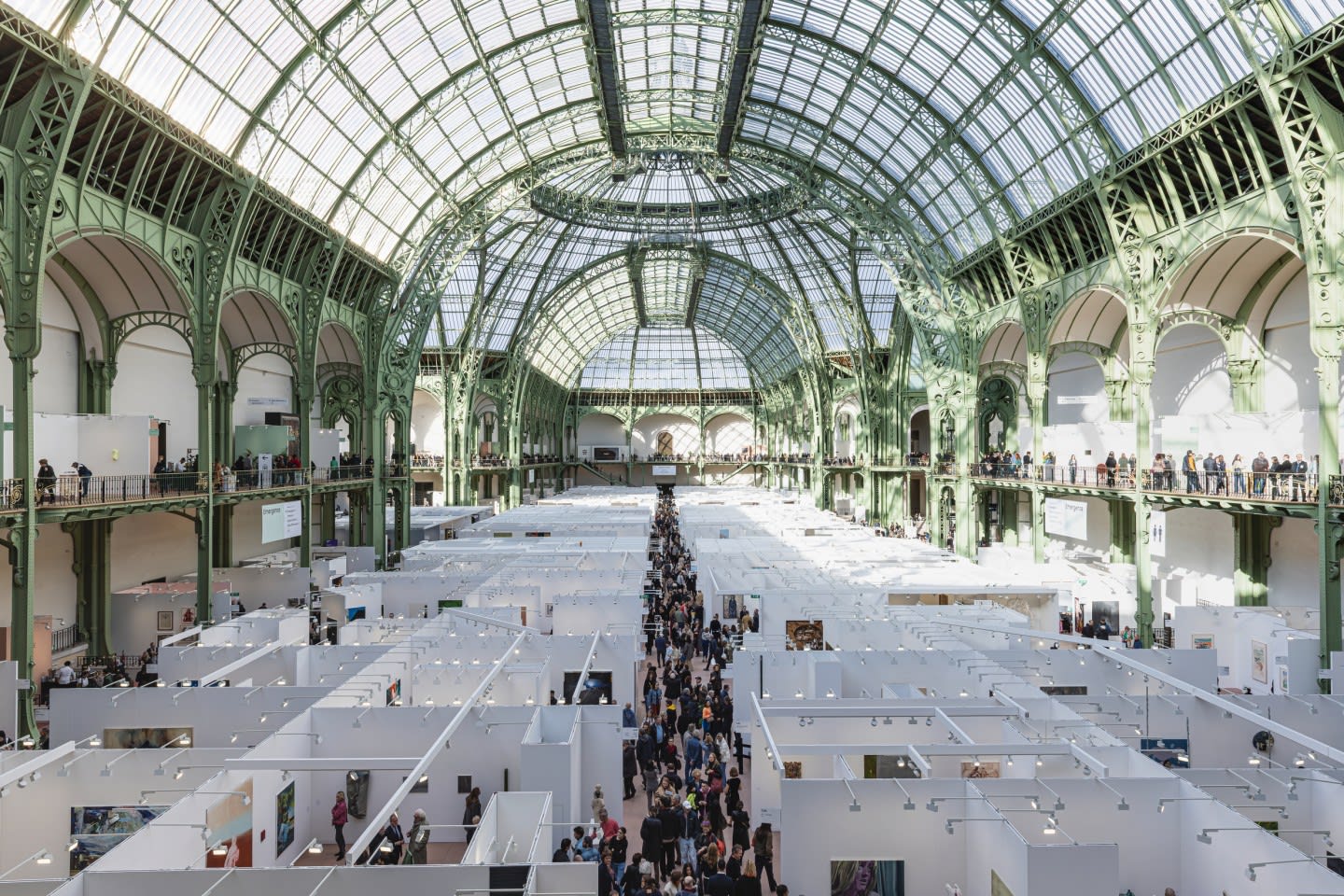
Every October, the arrival of Art Basel Paris transforms the French capital into the undisputed epicenter of the global art market.
Yet as collectors, blue-chip gallerists, and luxury sponsors gather under the glass vaults of the Grand Palais this week, the contrast between the fair’s hyper-insulated luxury and the reality on the streets of Paris has rarely felt so stark.
Outside the venue, the capital is recovering from a weekend of unprecedented tension. On Saturday, October 17, nationwide protests over soaring energy prices, inflation, and government austerity erupted into severe clashes across key Parisian neighborhoods. What began as student blockades and trade union marches quickly descended into property damage, street fires, tear gas, and mass arrests across the city center. By Sunday, the violence forced major cultural institutions like the Jeu de Paume to cancel high-profile events and on Monday the Louvre closed, while commercial galleries quietly adjusted preview schedules as local authorities imposed heightened security protocols and night curfews in parts of the country.
Yet inside the Grand Palais, the machinery of the global art market functions with seamless precision. Immaculate white booths showcase multimillion-dollar masterpieces, VIP previews flow uninterrupted, and international capital continues its quiet work.
This dramatic friction brings a fundamental question into focus: how long can these two parallel realities operate side by side without acknowledging one another?
The art market has long relied on a degree of calculated detachment. Fairs are engineered as self-contained sanctuaries designed to isolate buyers and gallerists from external turmoil so that commerce can proceed unhindered. But when a city’s own cultural institutions, museums, and streets are disrupted by widespread civil unrest, that insulation risks looking less like professional composure and more like stark alienation.
For the art world, maintaining this bubble is not merely a choice—it is an economic imperative. In a cautious, post-boom market, galleries cannot afford hesitation, and institutions rely heavily on the momentum generated by mega-fairs to sustain their ecosystems. The show must go on, not because the art market is blind to the unrest stirring outside its doors, but because its entire financial model depends on projecting unwavering stability.
Main Image: Art Basel Paris