
Ancient Love Notes and Sketches found on Old Pompeii Wall
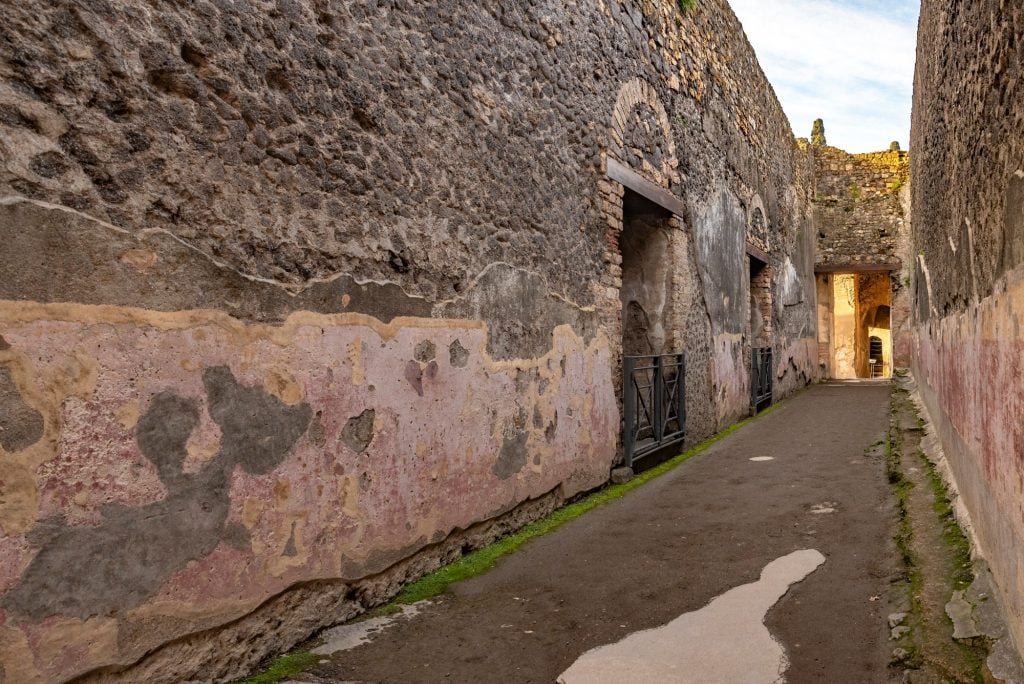
Researchers discovered nearly 80 previously unseen inscriptions carved into plaster along a corridor that connects Pompeii’s theaters to the main street, Via Stabiana. This corridor was first excavated more than 230 years ago.
The markings include a romantic message that begins with the words “Erato loves,” a lightly etched sketch of two gladiators in combat and various confessions, insults and farewells. The graffiti, preserved under volcanic ash had faded over time and remained invisible to the naked eye.
To reveal the lost writings, researchers used Reflectance Transformation Imaging, a method that captures surfaces under varying lighting angles to expose fine details. The work revealed about 300 inscriptions in total, including the 79 new ones.
Archaeologists had not expected new findings on the corridor’s walls, which had long been considered fully documented.
The team named their effort “Corridor Whispers,” a project led by Louis Autin and Eloïse Letellier-Taillefer of Sorbonne University and Marie-Adeline Le Guennec of Quebec University. They worked in partnership with the archaeological authorities at Pompeii.
Gabriel Zuchtriegel, director of the site, described the technology as a tool that opens new doors into the ancient world. He emphasized that Pompeii’s more than 10,000 known inscriptions make up an important cultural legacy.
The team is also building a 3D platform that will combine RTI imaging, photogrammetry and inscription data. The goal is to provide full visual access to the graffiti, allowing researchers to study and annotate the findings more effectively.
Examples of previously documented graffiti include a rushed farewell to a lover and a plea from a slave named Methe, who declared her love for Cresto while appealing to Venus, the Roman goddess of love.
These findings, along with the new love notes and sketches on the Pompeii wall, offer rare insight into the personal voices of the ancient past.