
2,500-Year-Old Solar Observatory Confirmed in Mexico
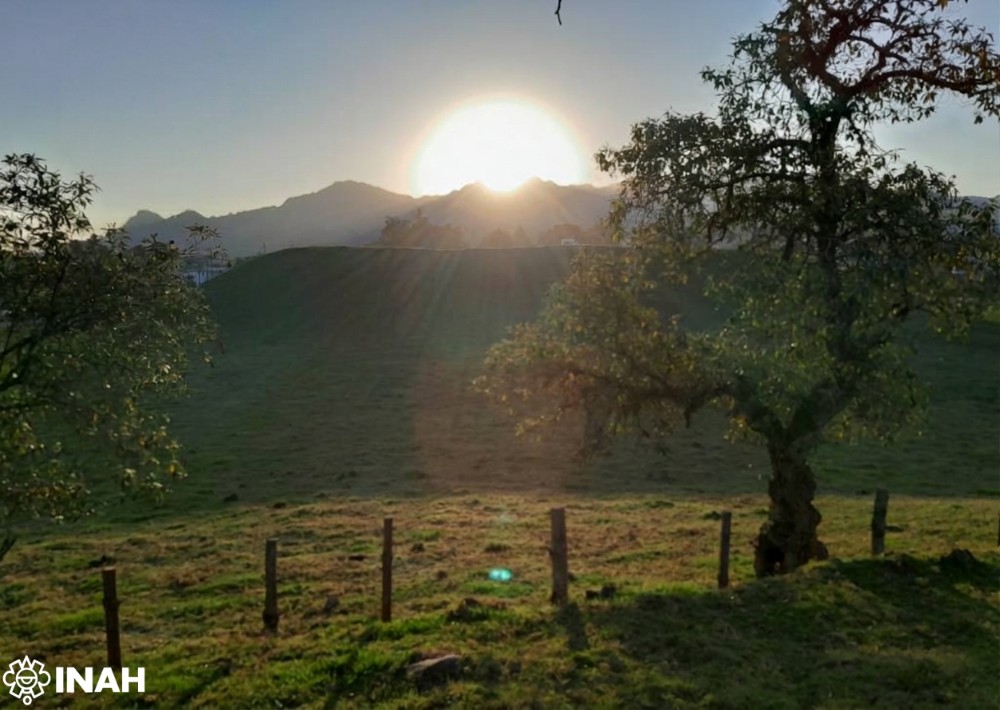
The ancient settlement of Tetelihtic in Puebla’s Sierra Norte was designed to watch the Sun, archaeologists now say, confirming the existence of a solar observatory more than 2,500 years old.
The finding, announced by Mexico’s National Institute of Anthropology and History (INAH), is the earliest confirmed Group E astronomical complex identified outside the Maya region. Its carefully placed platforms appear to have tracked the agricultural year, including the start of the calendar in February and the harvest season in October.
“The architecture of Teteles de Ávila Castillo tells us about societies that developed astronomical knowledge and incorporated it into the organization of their ceremonial spaces. Research by the INAH (National Institute of Anthropology and History) allows us to understand the depth of this knowledge and how it developed in different regions of Mesoamerica. Recognizing this scientific capacity is also recognizing a fundamental part of our history,” stated Claudia Curiel de Icaza, Secretary of Culture of the Government of Mexico.
The director of the project, Alberto Diez Barroso Repizo, said that this ancient settlement is an outstanding example of pre-Hispanic urbanism, configured through the observation of the surrounding landscape, such as the hills of the mountain range, and the astronomical horizon, "it will be a reference for Mesoamerican studies in the field."
He described Group E of Tetelihtic, located east of the Great Plaza of the ceremonial precinct, as consisting of a quadrangular courtyard flanked by two platforms at the east and west ends. The first is elongated (90 m, from south to north, by 40 m, from east to west), while the western structure is smaller (46 m, from north to south, by 27 m, from east to west), and functioned as an observation point.
“The layout of this complex is identical to those in the Maya area and, like the 'Group E' of Uaxactún, located in the Guatemalan Petén (and which is twice the size), the one at Teteles de Ávila Castillo is the oldest in Mexico. Both date from the Middle Preclassic period (1000-600 BC).
“Furthermore, at the Teteles observatory, the elongated base does not mark the equinoxes in the center. It served to fix the beginning of the pre-Hispanic Mesoamerican calendar in February, and the harvest in October, which makes it a complex and unique element.”
The researcher from the INAH Puebla Center added that, in turn, the eastern base of the complex constitutes a solar calendar, since observations verified that, from its front, at dawn, the trajectory of the star can be followed at the beginning of the equinoxes and solstices.
These findings, he pointed out, are significant contributions to corroborate the root of the Mayan ethnolinguistic affiliation of the Huastec groups, given that the Mayan presence in Teteles could date back to a millennium before our era, as the aforementioned observatory seems to demonstrate.
The specialist mentioned the possible connection of the site to the Nahua goddess Nantehuitz, “our mother of the south,” due to the orientation of its main structure with Canopus, the second brightest star in the night sky. Another central hypothesis of the archaeological project suggests that the origins of the Totonac culture, which flourished in this mountainous region and the northern Gulf Coast, could be found here.
“Tetelihtic was in use between the Middle Formative period ( ca. 900 BC) and the Protoclassic period ( ca. 100 AD). By that time, when Cantona, Cholula and Teotihuacan emerged, it was partially abandoned; however, several offerings on the periphery of the ceremonial precinct, dating from 100-600 AD, indicate that it continued as a place of worship.
“A Totonac offering, dating from 600-900 AD, was also found on one of the enclosure's platforms, indicating that Teteles was already abandoned by then. This leads us to believe that its original inhabitants were ancestors of the Totonac groups that settled in Yohualichan (Cuetzalan, Puebla) and El Tajín (Veracruz),” Diez Barroso concluded.