
2,000-Year-Old Inscriptions discovered in Egypt’s Valley of the Kings
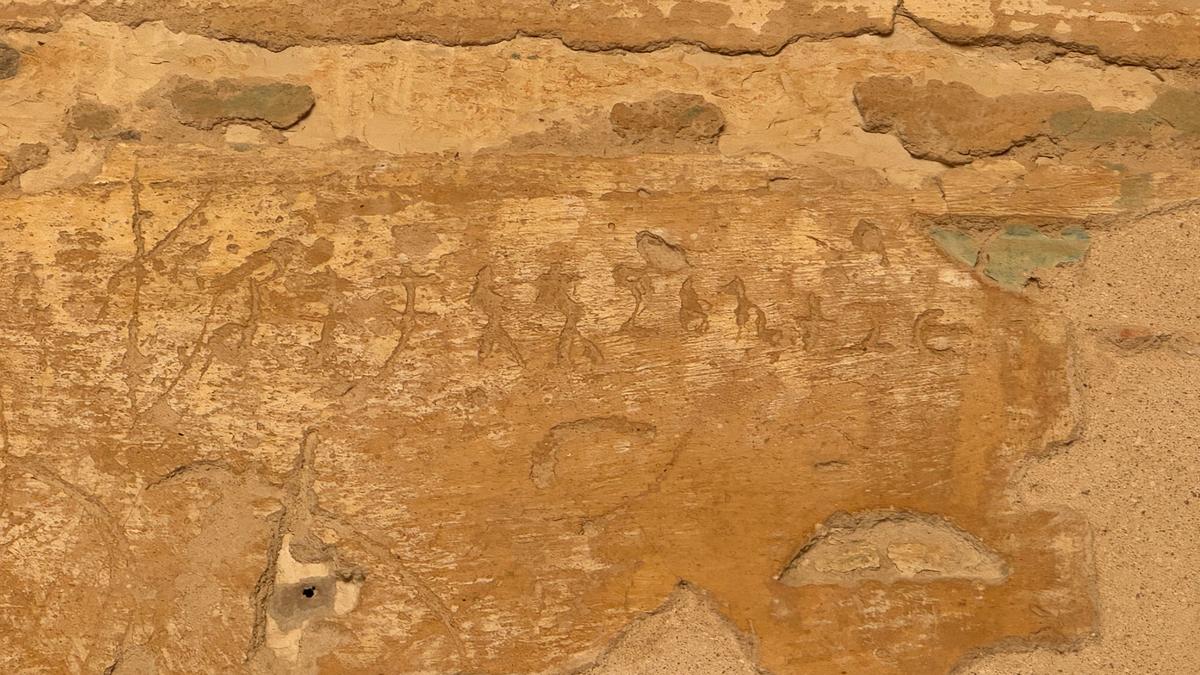
Around 30 inscriptions, the majority in Tamil-Brahmi, have been identified in Egypt’s Valley of the Kings, offering striking new evidence of the global reach of ancient Tamil civilisation and confirming that Tamils travelled and lived in Roman Egypt between the 1st and 3rd centuries CE.
The inscriptions were identified during a study conducted in 2024 and 2025 by Professor Charlotte Schmid of the French School of Asian Studies in Paris and Professor Ingo Strauch of the University of Lausanne. Their findings were presented in a paper titled ‘From the Valley of the Kings to India: Indian Inscriptions in Egypt’ at the International Conference on Tamil Epigraphy in Chennai.
The scholars documented close to 30 inscriptions across six tombs in the Theban necropolis near Thebes. Of these, around 20 are in Tamil-Brahmi, the earliest known script used to write Tamil, while the remaining inscriptions are in Prakrit, Sanskrit and Gandhari-Kharosthi.
The discovery establishes that people from the Tamil landscape were not only engaged in maritime trade with Egypt, but also travelled inland to the Nile valley and left their names alongside Greek and Latin graffiti already present in the tombs. Visitors appear to have followed an existing Mediterranean custom of marking their presence within monumental sites.
The most prominent name among the inscriptions is ‘Cikai Koṟṟaṉ’, which appears eight times across five tombs, sometimes carved high on interior walls and near entrances. One inscription records the phrase “came and saw”. Other Tamil names identified include Kopāṉ, Cātaṉ and Kiraṉ, all of which are attested in early Tamil inscriptions in South India.
“The name Cikai Koṟṟaṉ is revealing, as its first element may be connected to the Sanskrit śikhā, meaning tuft or crown. While this is not a common personal name, the second element, koṟṟaṉ, is more distinctly Tamil. It carries strong warlike associations, as it derives from a root, koṟṟam, meaning victory and slaying. This root is echoed in the Chera warrior goddess Koṟṟavai and the term koṟṟavaṉ, meaning king,” Schmid explained.
The repeated appearance of the name Koṟṟaṉ has parallels in earlier finds from Egypt. It appears in ‘Koṟṟapumāṉ’, inscribed on pottery discovered at Berenike, a Red Sea port city that functioned as a major gateway between Roman Egypt and the Indian Ocean world. The name also occurs in the Sangam corpus, linking the Egyptian graffiti directly to the literary and epigraphic record of ancient Tamilagam.
Another Tamil inscription reads “Kopāṉ varata kantan”, translated as “Kopāṉ came and saw”, reflecting the same formula found in Greek graffiti in the tombs.
The presence of Tamil-Brahmi inscriptions in the Valley of the Kings significantly expands earlier archaeological evidence, which had largely focused on coastal trade centres such as Berenike. The inland location of these inscriptions demonstrates that Tamil travellers moved far beyond ports, visiting major cultural and royal sites in Egypt.
The findings have been welcomed by Tamil Nadu’s Finance and Archaeology Minister Thangam Thennarasu, who said, “This discovery stands as a resounding reminder to the world that the Tamil people are a proud civilisation that left their imprint across global cultures, far beyond the seas. Tamil Brahmi inscriptions dating back 2,000 years have been found in the pyramid tombs of Egypt. The name of a Tamil merchant, Sikai Kotran, has been discovered eight times across five different pyramids. This underlines how deeply the Tamils were embedded in the ancient global trade network.”
“These findings serve as further evidence that even during the Roman period, the Tamils had crossed the seas to reach Egypt, practising a form of globalisation thousands of years before the term was coined. These findings reinforced our identity as a truly global Tamil community and filled us with pride,” he added.
The research also indicates that visitors came from different regions of the Indian subcontinent, including northwestern and western India, reflecting a wide and interconnected Indian Ocean trading network. One Sanskrit inscription refers to an envoy of a Kshaharata king who “came here”, suggesting that merchants, envoys and individuals connected to ruling lineages all participated in these transoceanic exchanges.
Together, the inscriptions provide rare and tangible evidence of ancient Tamil presence in the Mediterranean world, demonstrating not only commercial links but also cultural interaction, literacy and participation in shared traditions of travel and commemoration.